January 2026
On the morning of 20 November 1945, the eyes of the world were on the crowded Palace of Justice in Nuremberg. Silence fell over the courtroom. The soft, calm voice of Lord Justice Lawrence opened the proceedings of the most important trial of the century. As he began speaking in English, his words were instantaneously rendered through the cable system into French, German and Russian. For the first time in human history, a multilingual judicial process unfolded in real time. Simultaneous interpreting had been born.
The Nuremberg Trial marked a milestone not only in international justice and accountability for crimes against humanity. It also represented a profound shift in fairness, language accessibility and multilingual communication. But how did this groundbreaking language solution come about? What has changed since 1945? And, most importantly, what has not changed after 80 years?
Before Nuremberg
Prior to the twentieth century, multilingual communication in diplomacy relied largely on one language —French was the lingua franca of international relations. However, this model began to fracture during the First World War, when English-speaking negotiators from the United States and the United Kingdom increasingly found themselves unable or unwilling to communicate solely in French. The response was pragmatic rather than innovative.
Interpreting emerged as an auxiliary task performed sentence by sentence, usually by a bilingual diplomat or aide. This early form of consecutive interpreting involved speakers pausing frequently waiting for an intermediary to render their words into another language. While functional, consecutive interpreting imposed severe limitations: meetings expanded in duration, discourse lost momentum, and rhetorical force was diluted.
Whispered interpretation (also known by the French term chuchotage) offered a partial solution in many bilateral or smaller meetings but proved disruptive in formal settings. As international cooperation intensified after World War I, particularly with the establishment of the League of Nations, the need for more efficient multilingual communication became apparent.
Visionaries such as Edward Filene and engineer Alan Gordon-Finlay began experimenting with technical systems designed to allow interpretation to occur simultaneously. Although their early prototypes demonstrated that technology could facilitate real-time language transfer, these systems remained peripheral curiosities. There was no professional personnel trained to use them nor a political imperative strong enough to force their adoption. Until World War II. History was about to be made.
The Nuremberg Trial
Under the authority of the London Agreement signed by the allied powers, the International Military Tribunal (IMT) convened in Nuremberg (Germany). Its mandate was unprecedented, namely, the indictment and prosecution of senior Nazi officials for war crimes and crimes against humanity. 24 leading figures of the Third Reich captured by the Allies —including Hermann Göring, Rudolf Hess and Joachim von Ribbentrop— were about to stand trial before the world.
However, the tribunal faced an immediate logistical and ethical challenge. The scale of linguistic complexity was staggering as judges, prosecutors, defence counsels, witnesses and defendants hailed from all corners of a fractured world. Fair justice dictated that every participant, not just the presiding judges, must be able to follow the proceedings in their own language, and all defendants were entitled to fully understand the charges against them.
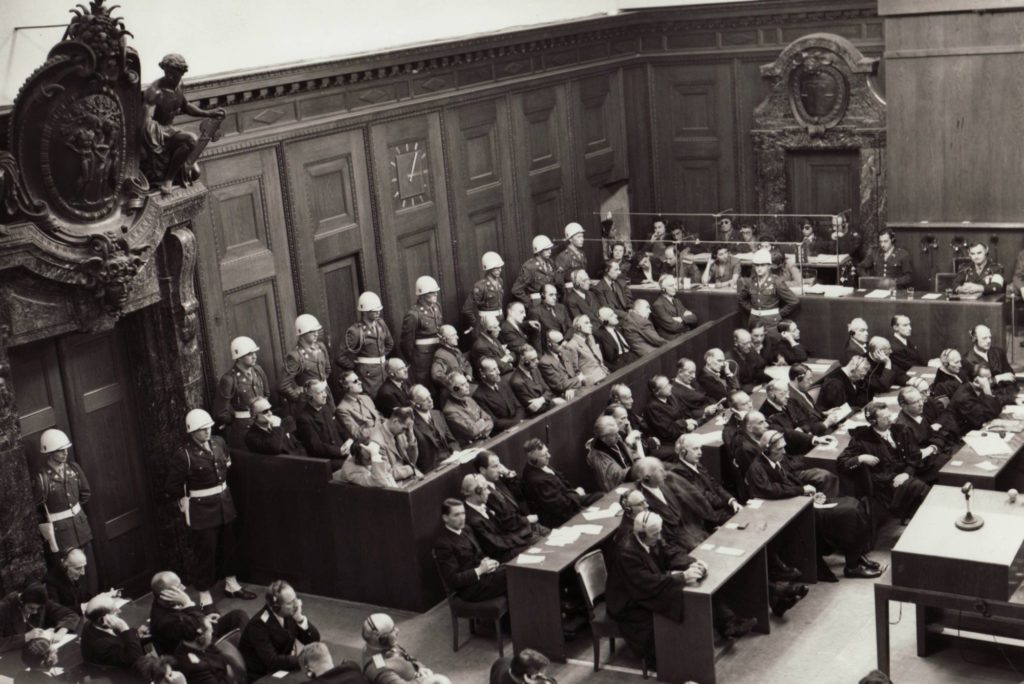
The IMT was formed by judges from the United States of America, the United Kingdom, France and the USSR. Therefore, the proceedings were to be conducted in four official languages: English, French, German and Russian. This meant that every single utterance had to be made intelligible in three other languages. The initial reaction from the prosecutors and judges was concern and overt scepticism. It was hard for them to believe that one system could provide access to four languages simultaneously. Moreover, it seemed to them a task beyond human capabilities to hear and speak at the same time in different languages.
Additionally, due to the trial’s implications and huge international exposure, the tribunal’s charter mandated that the proceedings had to be “fair and expeditious”. Consecutive interpreting —the method used at most international diplomacy meetings— could multiply the length of the trial by four, rendering the process untenable. From both practical and ethical standpoints, this was unacceptable. Justice delayed by linguistic inefficiency would be justice denied. Justice delivered without comprehension would be justice corrupted. How could a multilingual legal feat of such magnitude be accomplished?
The birth of a new language solution
Colonel Léon Dostert, a linguist by training and a seasoned military language officer, had served as General Eisenhower’s interpreter during the war. Dostert was acutely aware of the inadequacies of existing interpreting methods, but he also understood that simultaneous interpreting —long a conceptual possibility— had never been executed on this scale nor under such demanding conditions.
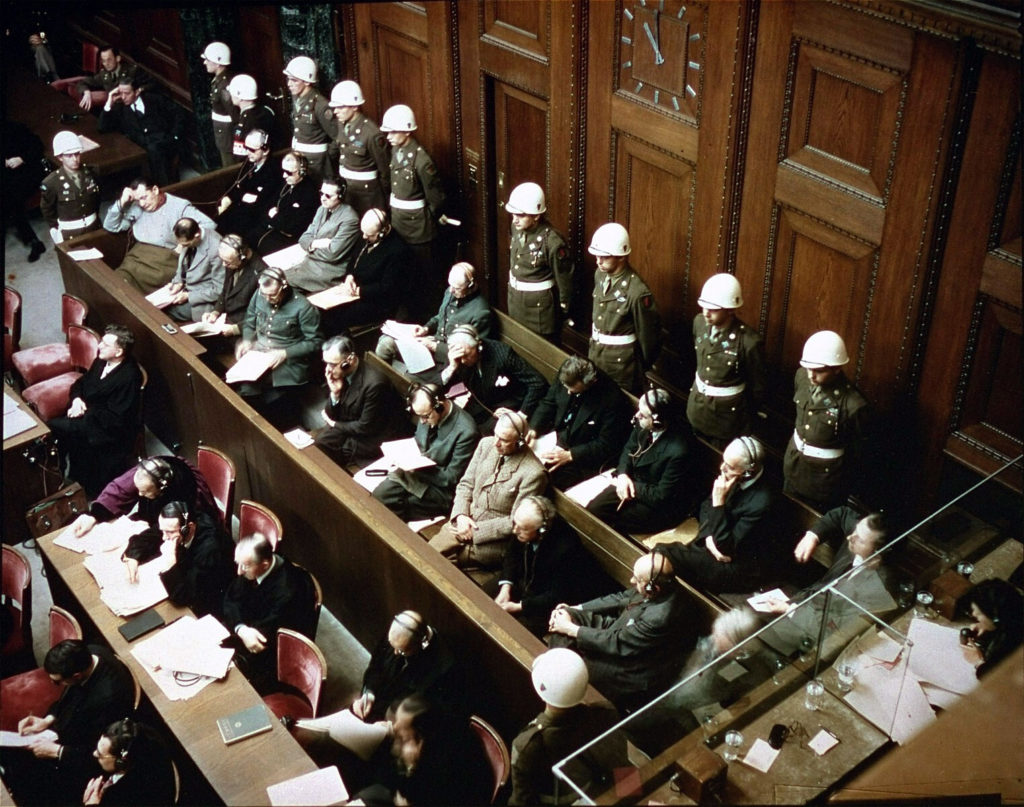
Drawing on the Filene-Finlay system previously used at the League of Nations, Dostert envisioned a fully integrated multilingual solution adapted to the high-stakes environment of a criminal tribunal. He proposed a daring solution: interpreters would render speech “as it was being delivered”, using headsets and microphones so that listeners in the courtroom could choose their preferred language channel.
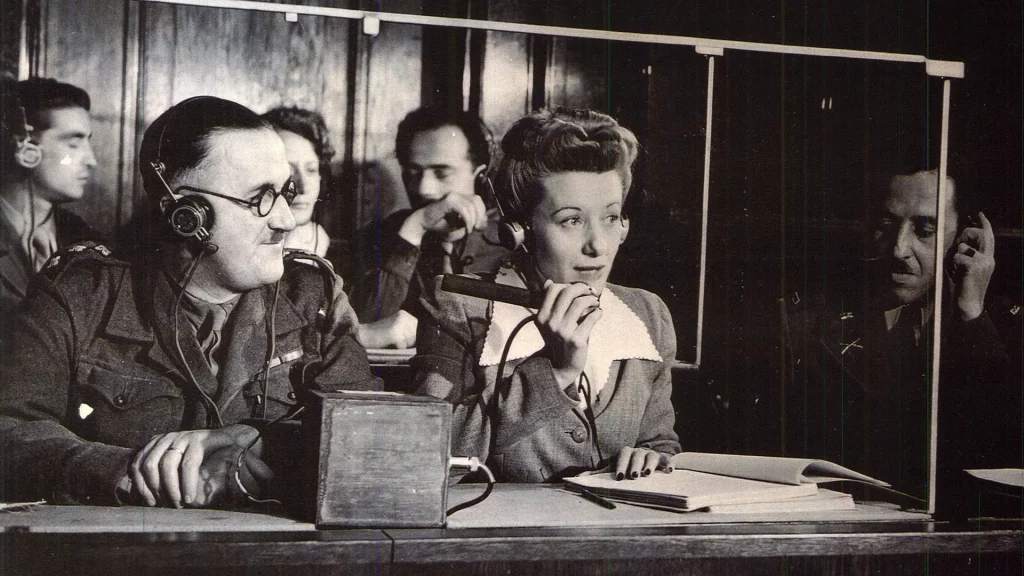
IBM supplied the hardware —microphones, switchboards, cables and approximately 200 headsets— free of charge, framing the project as a contribution to “world peace through world trade.” The system allowed participants to select one of four language channels, while interpreters worked from semi-soundproof glass booths, delivering real-time oral translations.
Crucially, the Nuremberg Trial rejected the use of relay interpreting. This would have delayed the proceedings and presented a major disadvantage at the trial, where the defence and the prosecution needed to hear what was said quickly enough to raise objections on time. Therefore, each interpreter worked directly from the source language into a single target language, minimizing delay and reducing the risk of semantic degradation. While this decision dramatically increased staffing requirements, it did preserve accuracy —an ethical imperative given the stakes involved.
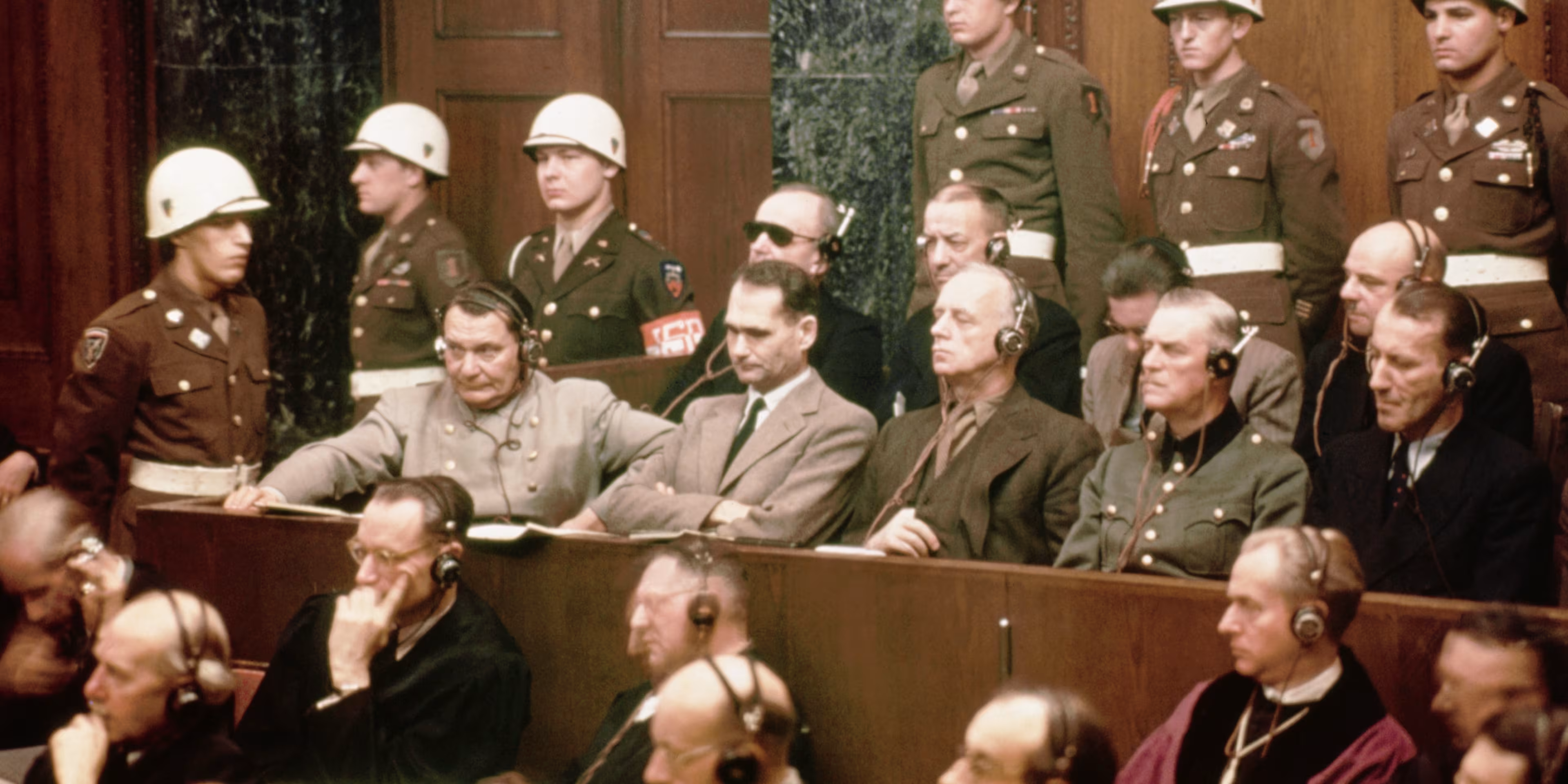
A monitoring system with a sign which read “slow” and a flashing yellow light regulated speech speed. Speakers who exceeded interpretable limits were instructed to slow down, ensuring that linguistic precision was maintained. Average delivery rates hovered around 130 words per minute, with peaks reaching 200 —speeds that demanded extraordinary cognitive agility from the interpreters.
What made simultaneous interpreting at Nuremberg not just a technical novelty but a necessity was its efficiency and fidelity. Under a consecutive model, each speaker would pause, the interpreter would translate, and the judge or listener had to wait. In a trial where emotional testimony, complex legal argument and cross-examination were constant, that approach would have made the process glacial and risked losing nuance and emotional force.
Simultaneous interpreting, however, kept the flow of dialogue intact. Judges and participants could maintain focus and rhythm. Legal arguments unfolded in real time. Crucially, defendants could hear proceedings in their language without unnatural pauses that might fragment their understanding or right to a fair defence.
Simultaneous was not merely faster than consecutive interpreting; it was closer to the experience of the speech in the original language. Tones, emphases, rhetorical structures and emotional cadences —elements central to legal advocacy and human communication— were fully preserved. And this mattered enormously at Nuremberg, since the tribunal sought not only to mete out justice but also to assert the moral gravity of the spoken testimony.
David Maxwell-Fyfe, the Chief British Prosecutor, thought that the simultaneous interpreting system was working so well that he could stop Reich Marshal Hermann Göring from answering something he did not ask before Göring had said a dozen words. The simultaneous interpreting system made the judges, defence and prosecution forget that four different languages were being spoken in the courtroom, and counsel were even able to call each other names in heated debates during cross-examinations.
But who were the men and women who made this multilingual feat possible?
The unsung heroes
By October 1945, IBM had already shipped all the equipment to Germany. However, only 3 weeks before the beginning of the most important trial in history, a crucial element was still missing —the interpreters.
Recruiting the interpreters for the Nuremberg Trial was a two-step process. The first step in the selection process consisted in a language test carried out at the Pentagon (the process started in the USA because this was the nation organising and financing the language services). Afterwards, the selected candidates were sent to Germany, where Dostert would test them for simultaneous interpreting. The criteria for selection was very strict due to the difficulty of the job. Hence, not only was it extremely hard to find people to be selected for Nuremberg, but of those selected, only a few became interpreters.
Once in Europe, Dostert found good candidates in smaller countries such as Belgium and Holland, where people generally speak one or more foreign languages with ease. He also discovered that the Paris Telephone Exchange was a good place to pick interpreters because the people who worked there were used to translating daily conversations over the phone.
The undertaking required the mental agility to hear and speak at the same time in different languages, and to quickly find an alternative if the best translation did not come to mind. Since they were not supposed to stutter nor stop, the interpreters had to make decisions quickly and accurately. The job also required great mental and physical efforts because of the need to interpret both speedily and accurately as well as to adapt to the speed of the speaker. Additionally, good candidates needed a professional background in law and public speaking experience. Interpreters were also required to have a good voice and clear enunciation, so that it would be easy to listen to them for hours at a time. Finally, given the stressful conditions of the task at hand, interpreters had to have self-composure in difficult situations and the ability to concentrate and keep calm under pressure.
In Nuremberg, a Translation Division was formed and organised into four Branches: Court Interpreting, Documentation Translating, Court Reporting and Transcript Reviewing. After testing hundreds of candidates, linguist and interpreter Alfred Steer calculated that only five percent of the candidates tested —including experienced consecutive interpreters— could do simultaneous interpreting. The Translation Division discovered that this undertaking required men and women of a degree and skill far beyond that of the average translator or interpreter, and that very few people could perform simultaneous interpreting.
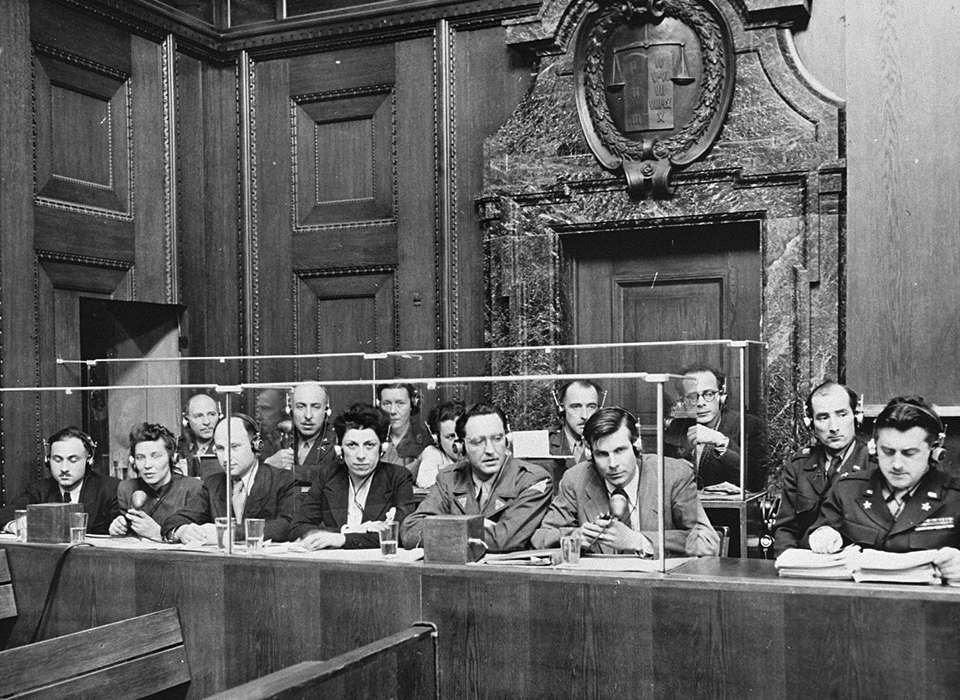
As the starting date for the trial was fast approaching, the selected candidates underwent two weeks of training sessions in the form of mock trials in the attic of the Palace of Justice in Nuremberg. They practiced with a provisional installation of the IBM equipment, reading documents to each other and posing as prosecutors and judges while some of them were interpreting into the different target languages. The speed of speech was increased gradually and the voice, diction and performance of each interpreter were checked and corrected.
Finally, 36 interpreters were selected and organised into three teams of twelve interpreters each. Team 1 was on duty inside the courtroom performing simultaneous interpreting into the four official languages. Team 2 was on stand-by in a room nearby listening to the proceedings and ready at a moment’s notice to enter the booths in case they needed to substitute one of their colleagues. And Team 3 was free, resting and preparing for their next shift. The training program continued throughout the trial as more and more members for the Translation Division were needed.
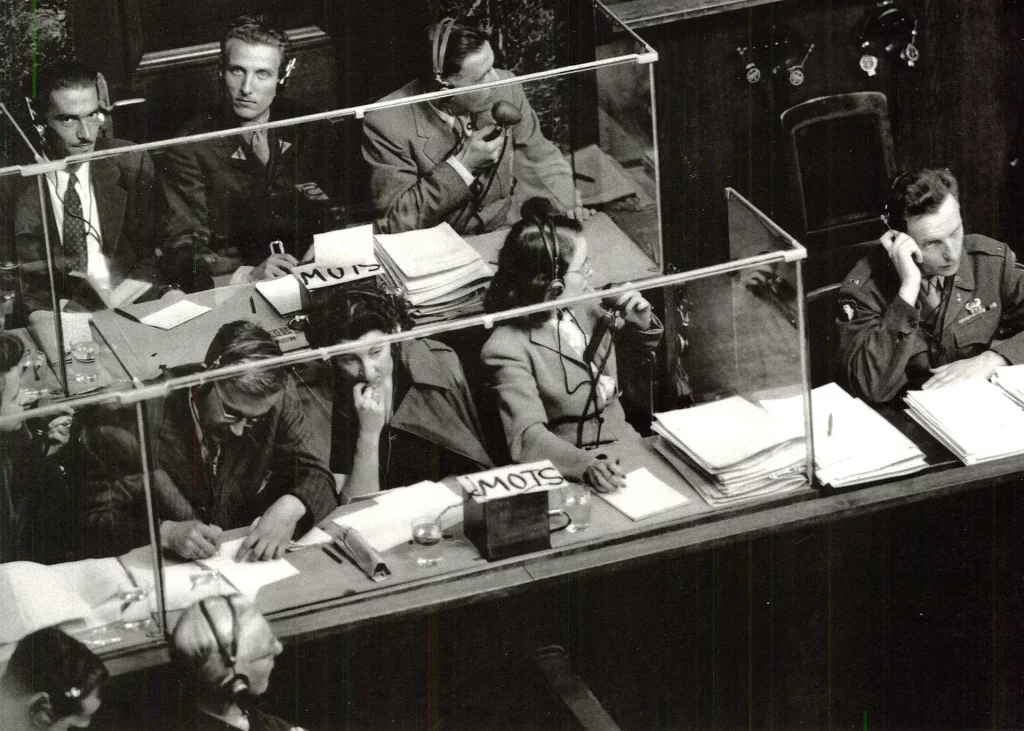
The challenges the interpreters faced during the proceedings were immense. One of them was German syntax with its long-winded constructions placing the verb at the end of the sentence. However, in French and English the main verb is required in the first half of each sentence. The interpreters could not afford lagging behind during the trial waiting in silence to hear the verb in German which determined the main action and correct meaning. So how were they supposed to translate the verb before they actually heard it? The interpreters had to device a technique whereby inferring from the first few words of the sentence and its context they anticipated what the verb was going to be. They started the sentence in the target language with more vague and general phrases and then became more specific once they finally heard the main verb in the source language in real time. This technique —which required mental agility and a native-level command of the language— is still used today by experienced and skilful conference interpreters.
Another linguistic challenge the interpreters had to face during the Nuremberg Trial was the German word Ja. While it was usually translated into English as “Yes”, the expression Ja was often used by German speakers as a space-filler in an attempt to gain some time to think about the answer (more accurately translated as “Well…” or “Erm…”). Therefore, when a prosecutor asked “Did you realise that what you were doing was a criminal act?” and the Nazi defendant started his reply with Ja…, the interpreters had to be absolutely sure what nuance of meaning that German word carried. If interpreted literally, this utterance could amount to an admission of guilt. And once that “Yes” was in the transcript of the legal proceedings, the wrong translation could mean they were hanging a man. Linguistic nuances carried life-or-death consequences. The interpreters at Nuremberg were not merely linguistic conduits; they were active guardians of procedural fairness.
Adding to the pressure was Reich Marshal Hermann Göring, who frequently challenged interpretations, exploiting his own bilingualism. Göring did not hesitate to be vocal and play on the fact that he knew both English and German, which led to some heated linguistic debates during the proceedings about the meaning and nuanced connotations of some translations, which he proudly used to lecture Judge Jackson on why the prosecution was wrong while showing off his language skills.
Furthermore, in addition to the fatigue and cognitive load caused by simultaneous interpreting, we should not forget the emotional toll and psychological torture the interpreters had to endure day after day for months by being exposed to an unparalleled degradation of human beings while recounting the inhumane atrocities and horrors which took place in the Nazi camps perpretated by the German leaders present in the same room.
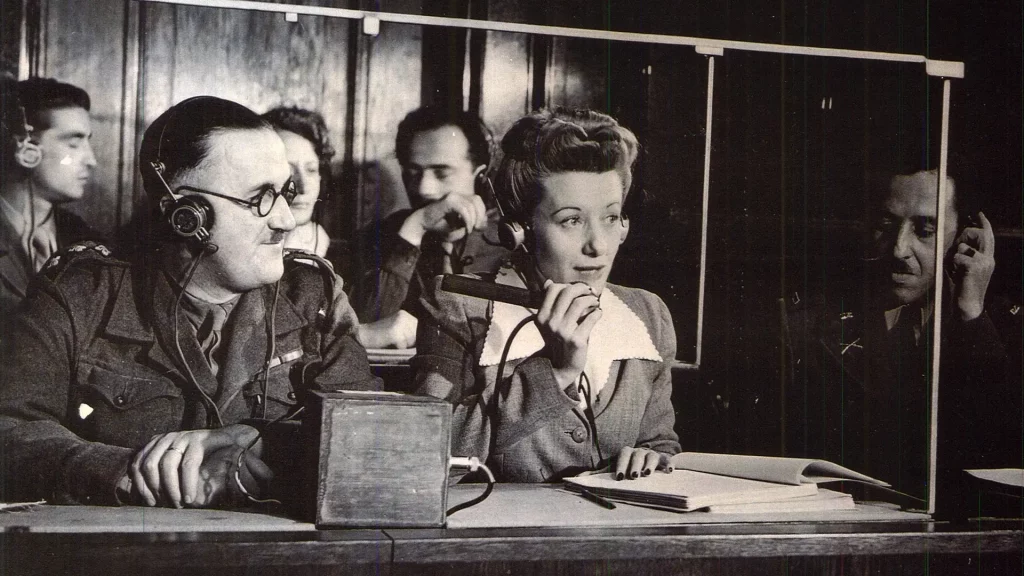
These are the names of the unsung heroes who made possible the most important trial in history: John Albert, Boris Bogoslowski, Margot Bortlin Brant, Thomas Brown, Haakon Maurice Chevalier, Edith Coliver, Léon Dostert, Wolfe Hugh Frank, Elisabeth Heyward, Stefan Horn, Armand Jacoubovitch, Patricia Jordan, André Kaminker, Leo Katz, Klaus and Doris de Keyserlingh, George Youri Khlebnikov, Ms. Kulakovskaya, Hans Lamm, Helga Lund, C.D. MacIntosh, Mr. Mamedov, David McKee, Jean Meyer, Ms. Ninna Orlova, Helen Pashkoff, Ursula Crowley-Prescott, Siegfried Ramler, Edouard Roditi, Evgenia Rosoff, Sigmund Roth, Ignace Schilovsky, Gerald Schwab, Eugene Serebrenikov, Marie-France Skuncke, Ms. Solovieva, Harry Sperber, Alfred Gilbert Steer, Ina Telberg, Lieutenant Tolstoy, Frederick Treidell, Oleg Troyanovsky, Ernest Peter Uiberall, George Vassiltchikov, Susanna Vernon, Margarete Abraham-Wagner, Ferdinand Wagner, Benjamin Wald, Marie Rose Waller and Hannah Schiller-Wartenberg.
We should also note the presence of interpreters from non-official languages —such as Czech, Polish and Yiddish— who were brought in for specific questions and testimonies during the proceedings. While the core interpreting division managed the four principal languages, this auxiliary cadre ensured that throughout the Nuremberg Trial no voice was left unheard.
On 1 October 1946, after ten months of proceedings inside the Nuremberg courtroom, the verdict was read. The most important trial in the twentieth century came to an end. Without a shadow of a doubt, the achievements of the unsung heroes of Nuremberg are truly impressive: they made possible one of the most crucial trials in human history, they created a new profession —simultaneous interpreting—, they went on to introduce it and teach it around the world, and they facilitated the creation of international organisations and the understanding among delegates and people of all countries and languages.
What has changed after 80 years?
The success of simultaneous interpreting at the Nuremberg Trial marked a decisive turning point in multilingual communication. What began as a pragmatic solution to an unprecedented legal challenge was rapidly institutionalised. Within a year, the newly founded United Nations adopted simultaneous interpreting as a central communicative practice, while international organisations and professional associations emerged to standardise training, ethics and working conditions. An improvised wartime experiment thus evolved into a foundational infrastructure of global governance.
Over the following decades, simultaneous interpreting became indispensable to international diplomacy forums and multinational institutions. Organisations such as the United Nations, the European Union and the Council of Europe could not function effectively without the ability to conduct proceedings in dozens of languages simultaneously. Parallel to this institutional expansion, interpreter education was formalised through university programs and professional certification, transforming interpreting into a rigorously trained, academically grounded profession.
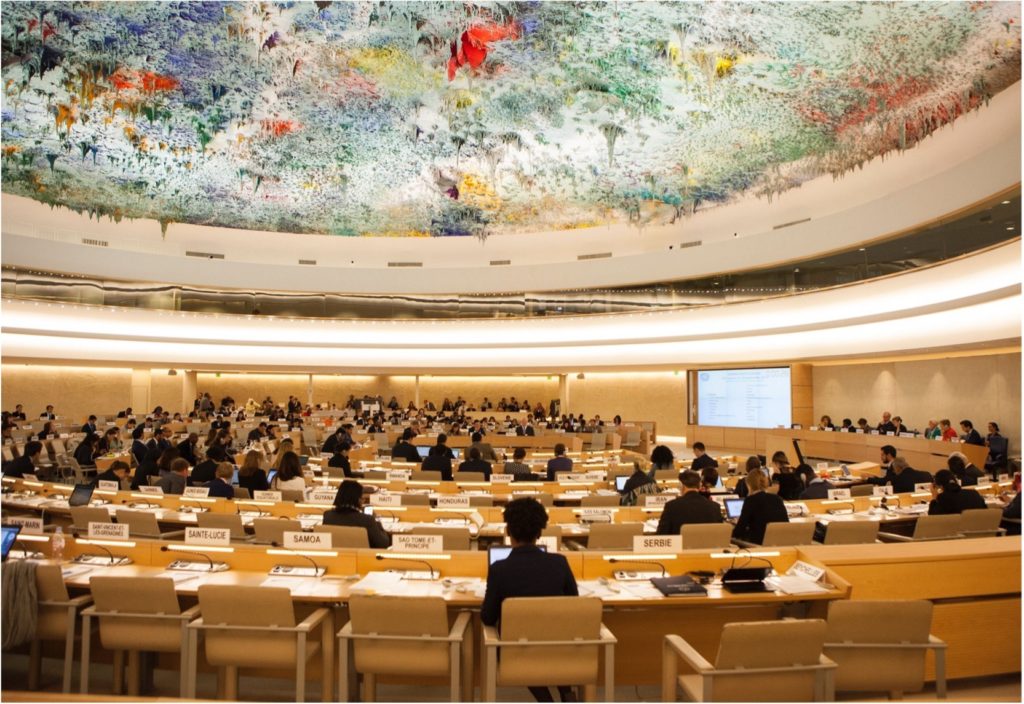
Technological progress has also been striking since 1945. The cumbersome vacuum-tube equipment used in Nuremberg has given way to acoustically refined booths, digital transmission systems, wireless receivers and remote interpreting platforms that span continents. Artificial intelligence (AI) has introduced speech recognition, automated translation and real-time subtitling, dramatically expanding multilingual access and operational efficiency. From a technical standpoint, interpreting tools have never been more advanced.
However, these advances have not altered the core nature of the task. Interpretation is not merely linguistic substitution but an act of human cognition. It requires anticipation, contextual judgment, cultural literacy and sensitivity to tone, intent and rhetorical force. Machines may process language with speed and consistency, but they cannot understand it nor grasp irony, moral implication, emotional subtext or historically charged ambiguity —elements that are often decisive in medical, legal and diplomatic contexts.
Despite advanced AI-powered speech-to-text breakthroughs in recent years, professional interpreters remain indispensable in legal proceedings, medical conventions, multilingual business conferences and high-stakes international diplomacy summits. Machines can assist but cannot replace the cognitive empathy that human interpretation demands. The tone of a voice, the pause before a crucial phrase, the historically grounded double meaning of a word —these subtleties remain out of reach for algorithms, no matter how advanced.
Equally irreplaceable is the ethical dimension of human interpreting. Confidentiality, neutrality and accountability are not technical parameters but moral commitments embedded in professional practice. In high-stakes settings, trust depends on the presence of a responsible human agent capable of judgment and ethical restraint. Without such oversight, reliance on automated systems risks distortion of meaning and erosion of justice where words carry profound consequences.
80 years after the birth of simultaneous interpreting, the legacy of Nuremberg affirms that technological progress does not diminish human agency, it amplifies the need for it. The Trial demonstrated that justice in a multilingual world depends not on translation alone, but on interpretation grounded in human intelligence.
Eight decades later, the world scene and the technological arena alike have seen many changes. Yet one thing remains unchanged —the need for human intelligence and skilled human interpreters.
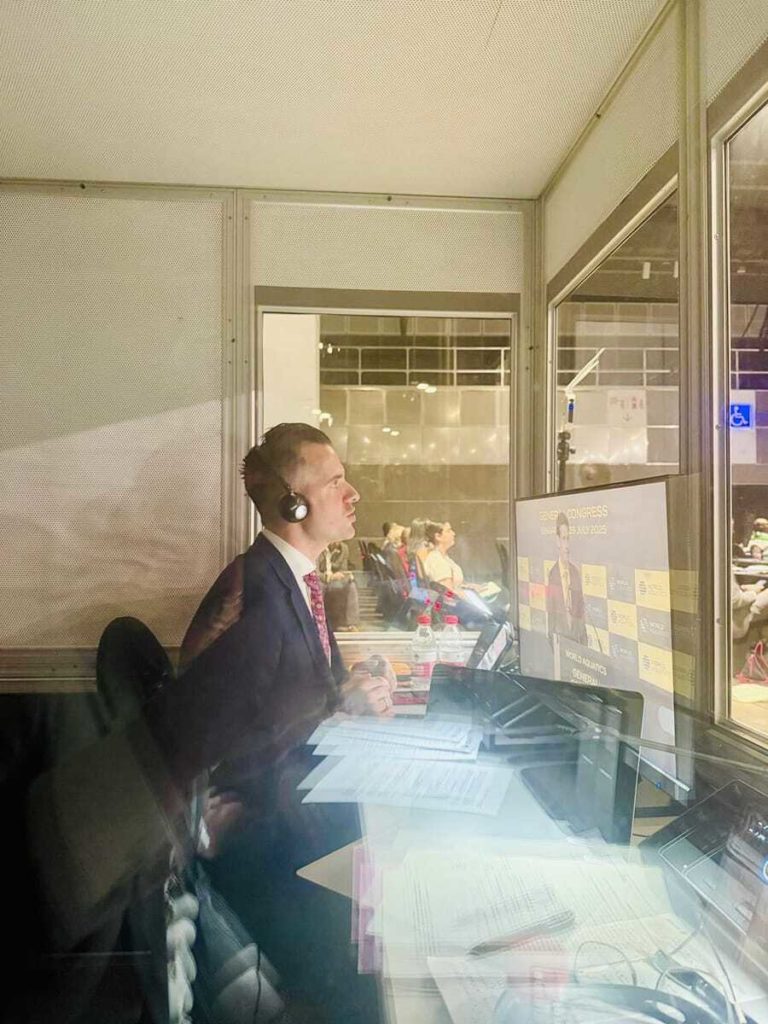
As Reich Marshal Hermann Göring himself acknowledged when the Allies offered him the right to legal counsel: “Of course I want counsel. But it is even more important to have a good interpreter.”

Rubén Sánchez Monleón
Founder & CEO at rsm language solutions
Certified Conference Interpreter
Global Multilingual Project Manager
Language Solutions Consultant
Interpreting Coach
International Speaker
Do you want to take your business global?
Do you need a bespoke language solution?
Please go to the visual and user-friendly “What do you need?” section on this web and our Team will contact you within 24 hours.
Alternatively, you can directly book a free one-on-one consultation meeting with Rubén here to pinpoint the best language solution for you, your business or event.